 PI:
Robert Moorhead, Mississippi State University
Co-PI:
Jamie Dyer, Mississippi State University Funding:
PI:
Robert Moorhead, Mississippi State University
Co-PI:
Jamie Dyer, Mississippi State University Funding: Office of Oceanic and Atmospheric Research
Other Missions Supported: National Environmental Satellite, Data, and Information Service, National Ocean Service, National Weather Service
Partners/Collaborators: National Weather Service (NWS) Lower Mississippi River Forecast Center (LMRFC), West Gulf River Forecast Center (WGRFC), Southern Region Headquarters, Uncrewed Systems Research Transition Office (UxSRTO)
Sponsor Number: NA16OAR4320199
MSU Award Number: 363527-191001-021000
NGI File Number: 19-NGI3-84
Performance Period: Oct 01, 2017 - Sep 30, 2022
Project Goals/Objectives:
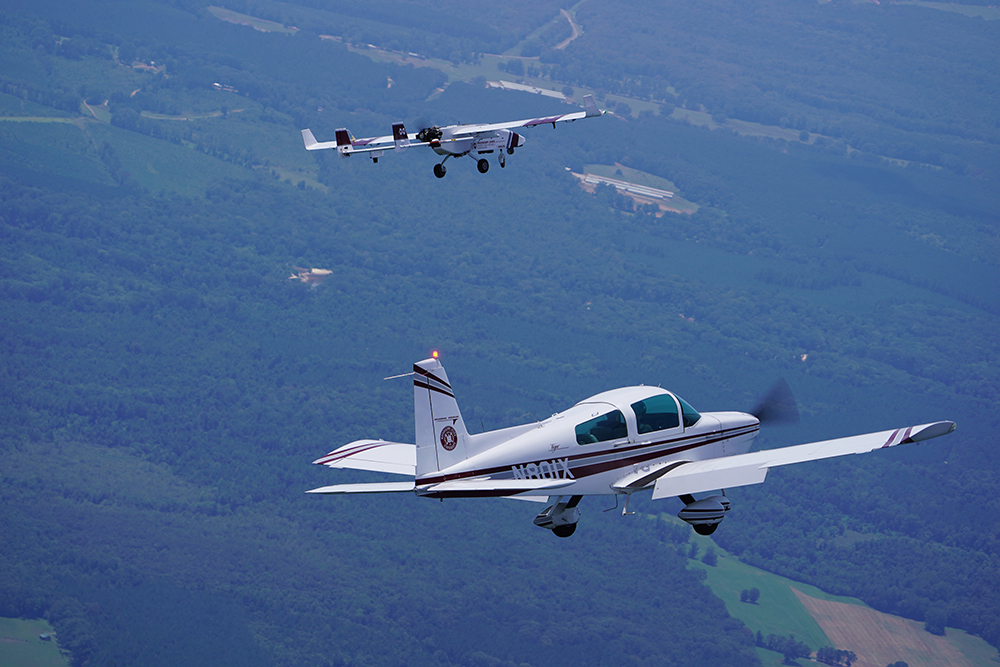
The goal of the project is to perform a cost and feasibility analysis of exploiting UAS to address the following priorities, as well as a data impact study. The requirements to be addressed are 1) Rapid response during and after a catastrophic flooding event to track changes in river channel structure and morphology and debris. 2) Detailed information on levee breaches and any inundation in near real time (location, width, depth). 3) Rapid response photos to document extent of inundation to verify flash flooding, flood inundation maps, and enable production of flood maps for more locations.
Project Accomplishments/Outcomes:
Achievements through 9/30/2022 include 1) Developed a 3TM document and briefed NWS/OWP personnel; 2) Conducted post-storm flood survey flights along Tombigbee Waterway following Hurricane Ida; 3) Continued integration/testing of DAA technology and development of BVLOS CONOP.
Outcome: We produced a cost benefits analysis for unmanned versus manned aircraft survey operations.
Project Impacts:
Development of the principal discipline: Weather is challenging to predict behind even a minor hurricane.
Development of human resources: We learned a lot more about the cost of flying manned aircraft.
Physical, institutional, and information resources that form infrastructure: Greater capacity and capability in our flight lab
Technology transfer: Personnel in the UxS RTO gained a better understanding of the trade-off in flying uncrewed and crewed aircraft for surveys.
Society: Potential to reduce danger to life in flying near severe storms. Reduce fossil fuel consumption by removing humans in the aircraft.